Make Agent Goal Loops Ship: Gates, Retries, and Audit Trails
A production agent goal loop ships when success is a testable contract, not a model claim: define gates, retries, and audit trails before the run.
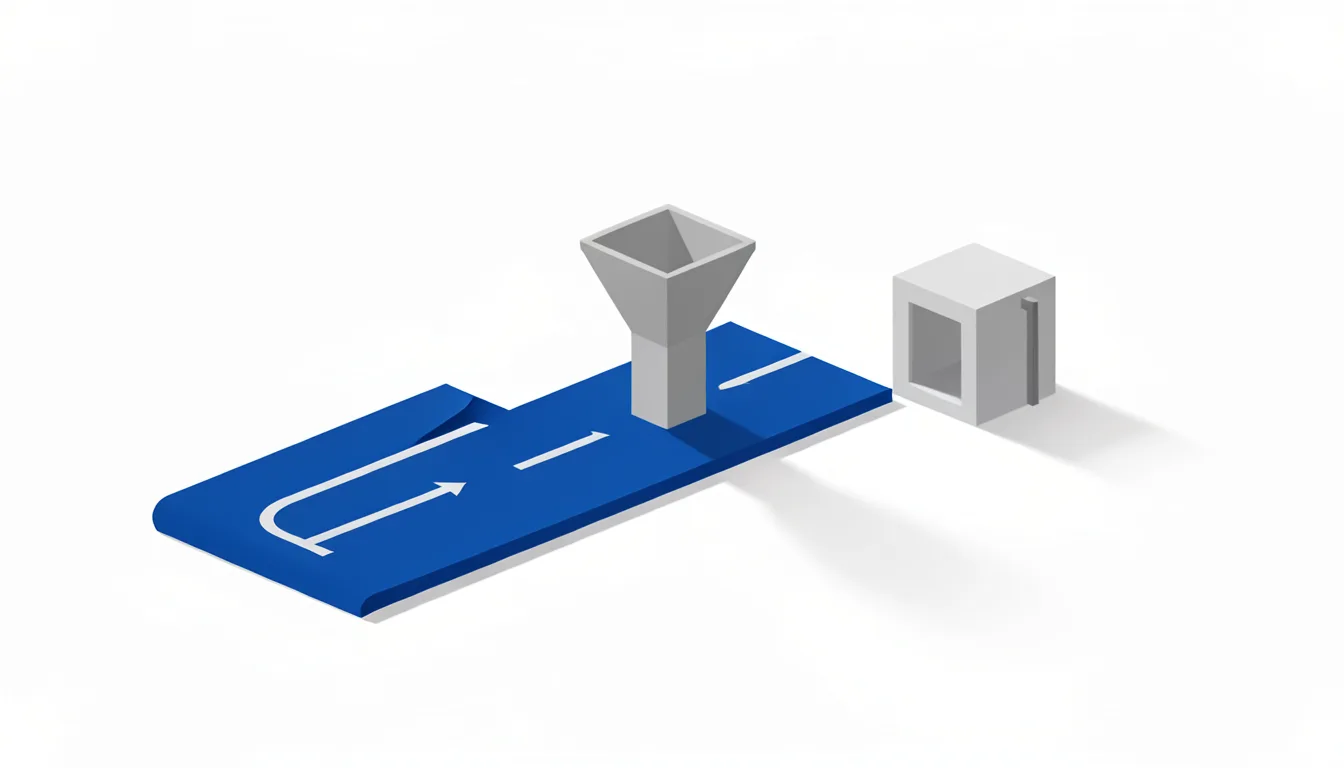
Demos end when the model stops talking. Production agent goal loops end when a contract is met, a gate fails, or an operator stops the run. The difference is not a smarter prompt. It is a system that can prove what happened, why it happened, and what to do next.
Most autonomous agents fail in production for the same reason: they are treated as workers who can be asked to finish, rather than as processes that must be verified. The fix is to make the goal loop auditable from the first request to the last artifact.
The contract before the run
Start with an approved request, not a free-form objective. Use a small corpus of requests that a person wrote or approved, and have the driver send one request unchanged through a fresh interaction.
The request is the input. The contract is the rest. It names the expected effect, the evidence that proves the effect, the stop conditions, and the artifacts that must exist when the loop ends. If the contract cannot be checked by a test, validator, schema, or effect check, it is not production-ready.
Decomposition comes after the contract. Break the goal into steps that each have a verifiable exit. A step is not a plan item. It is a unit of work with a before state, an after state, and a way to tell whether the after state is real. This keeps task decomposition from becoming a list of intentions.
Gates that keep the loop honest
Every loop needs a deterministic floor: tests, validators, schemas, and effect checks hold behavior that the feature already earned.
That floor is what separates verification from confidence. The model may claim success. The gate either accepts the claim or rejects it. The gate should be boring: it checks file shape, output schema, side effects, permissions, and invariants. It should not ask the model to grade itself.
If the world is unhealthy, the harness records no score, because infrastructure trouble is not evidence that the feature failed.
That rule matters because production environments are noisy. A flaky dependency, a missing credential, a timeout, or a broken tool can make a good agent look bad. The harness must distinguish feature failure from environment failure. If the environment cannot support the run, the run is not scored. It is quarantined, logged, and retried only after the world is healthy again.
The harness must expose a real failure, locate the missing capability, and preserve the lesson after the session ends.
In practice, that means the failure record should include the request, the step, the expected effect, the observed effect, the missing capability, and the next action. A failure that disappears when the session ends is not a failure. It is a memory leak in the system's ability to improve.
Retries, escalation, and human review
Retries are not a substitute for a contract. A retry is a controlled attempt to satisfy the same contract under changed conditions. It should be bounded, typed, and evidence-driven. The loop may retry a step when the failure is transient, the input is unchanged, and the gate says the next attempt is safe.
Escalation is the other path. When the loop cannot close the gap, it should stop and hand the operator a batch of evidence, not a vague summary. The batch should show what was tried, what failed, what was verified, and what remains uncertain. A person reads a batch of evidence and decides whether to continue, redirect, or stop.
Human-in-the-loop review works best at the batch level. The operator is not approving every tool call. The operator is reviewing a set of completed attempts, failed gates, and proposed next moves. That keeps the human where judgment is needed and keeps the loop moving where checks are sufficient.
Treat a gap as a hypothesis about cause, not a filename to patch. A missing capability may be a tool, a permission, a data source, a schema, or a policy. The loop should name the missing capability, not just the file that failed. That makes the next run easier to plan and the audit trail easier to read.
Audit trail as the product
The audit trail is not a log afterthought. The files make the development process inspectable.
Every run should leave behind a trace that an operator can read without asking the model to explain itself. The trace should include the approved request, the contract, the decomposition, each gate result, each retry, each escalation, and the final decision. It should be readable by a person and diffable by a system.
When the loop ships, the artifact is not only the completed task. It is the evidence that the task was completed under the agreed conditions. That is what makes autonomous agents useful in production: they do not just finish work. They leave a record that the work can be checked, repeated, and improved.
Build the loop as a contract first. Add the gates. Add the retry policy. Add the human review point. Add the audit trail. Then the agent can run, and the operator can trust what it did.