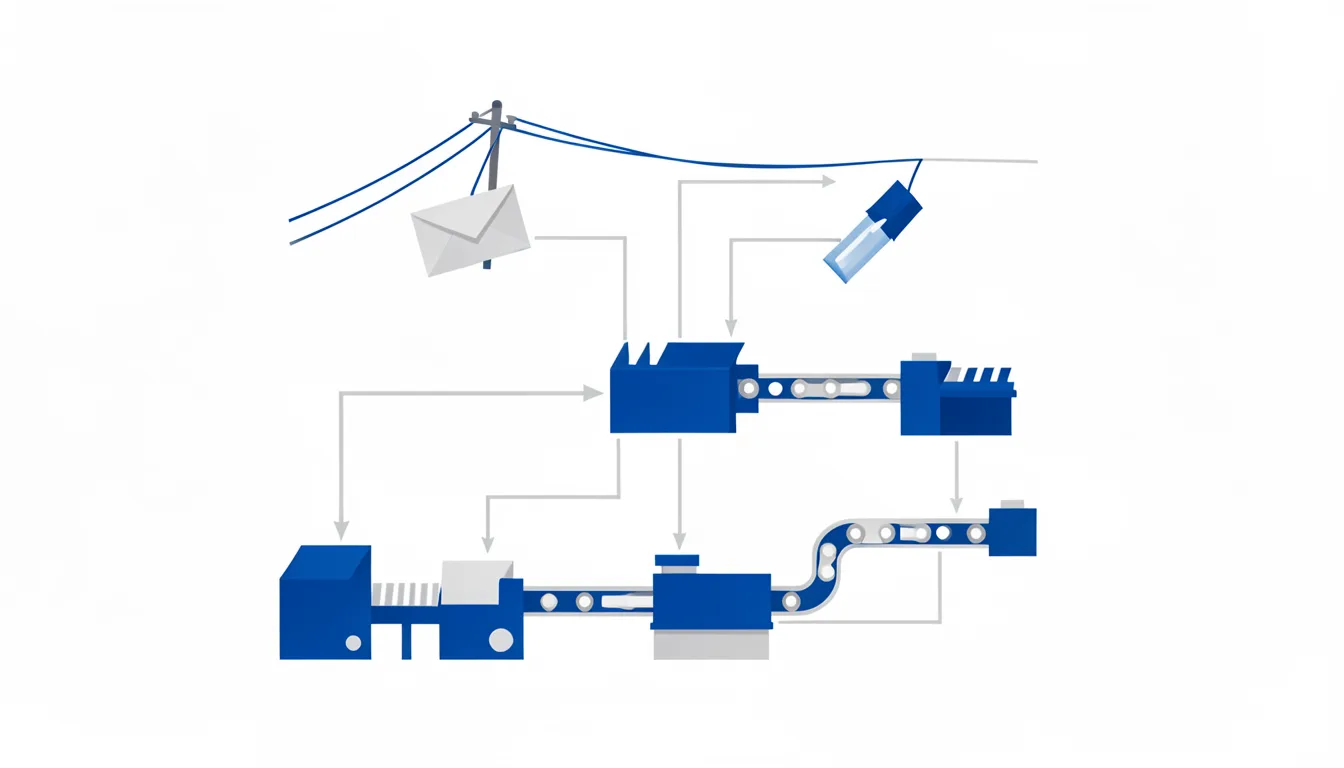
Build a football-data agent that turns transfer-market noise into scout-ready alerts
A constrained pipeline turns raw transfer updates into scout-ready alerts: allowlist sources, dedupe events, and sign off before publishing.
Build a read-only Binance inflow monitor with sandboxed inference, a risk-flag schema, a kill switch, and an audit log.
A covert agent is only as strong as its record: identity, custody, authentication, and scope controls decide whether the output survives court.
Operators should verify capture, delegation, and device-enforced privacy before putting a hands-free agent workflow on smart glasses.
A sandbox can become a shared store when agents can write to the same path.
A production runbook for AI-agent engineers: detect LLM provider failure, degrade, route to fallback, and notify users.
A local SQLite memory layer can replace bespoke vector stores for project-scoped AI coding agents when lexical search and static embeddings cover recall.
Undercover AI agents can support investigations only when operators pre-approve legal authority, supervision, evidence capture, and exit rules.
Treat agent-made office files as test fixtures: generate, open, convert, edit, re-export, and assert structure before shipping.
Lock the role, block file functions, isolate the process, and audit egress before an agent touches production data.
Production agents need a small, testable control surface: budget caps, scoped permissions, kill switches, evaluation gates, and escalation paths.
Agent deployments fail where identity, runtime, and governance split across products. This checklist closes the seams.
Treat out-of-scope agent behavior as a control-plane failure, then enforce task boundaries, execution-time authorization, audit trails, containment, and escalation.
An agent is production-ready only when its permissions, spend, approvals, logs, rollback, and incident response are explicit and enforceable.
A vendor's loss stack shows why autonomy claims fail when projects, churn, and slow cash dominate.
A production agent goal loop ships when success is a testable contract, not a model claim: define gates, retries, and audit trails before the run.
Agent swarms fail when identity, egress, and blast radius are missing, so operators need a minimum control set for tool-enabled agents.
Generation quality is not the risk. The risk is an agent pulling a competitor price, calling it yours, and shipping it before a human sees the source.
Treat the new prebuilt sales skills as a stage-based execution layer, and build custom only when the CRM cannot enforce the action.
High agent PR volume is manageable when a fork has a hard compatibility suite, a divergence ledger, and explicit human review gates.
Treat agents as non-human principals: issue scoped, short-lived credentials, record delegation chains, and revoke by identity before expiry.
Start with 232 tools and 44 skills: check tool exposure, encode the skill, and verify output against the criteria you set.
Treat the 37 prebuilt sales skills as a pattern library, then audit each one for stage, owner, trigger, data, rule, and KPI.
Before scaling Salesforce’s Claude plugin, map each of its 37 prebuilt sales skills to a task, data path, guardrail, and metric.
Build an AI undercover agent that produces admissible evidence Deploy AI Undercover Agents That Hold Up in Court
Use this checklist to decide whether smart glasses can carry a hands-free agent workflow Minimum control surface for production agents Keep AI Agents Inside Their Job: A Scope-Boundary Playbook for AI Ops Teams