AI Agent Startup Funding: Durable Workflow, Not Model Access
Early-stage investors want workflow proof, architecture, metrics, security, enterprise proof, and unit economics.
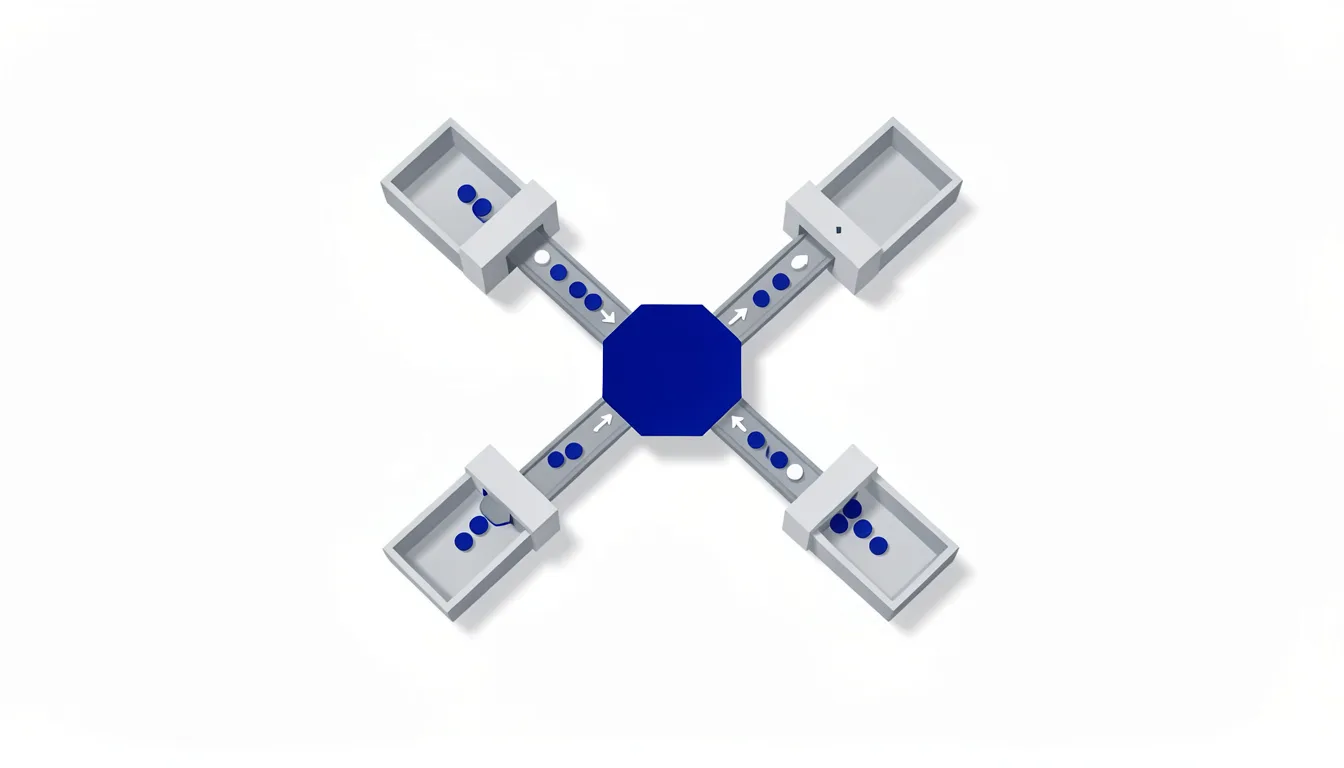
Investors underwrite a workflow that keeps working after the model changes. Model access alone does not carry the valuation. For an AI agent startup, the raise is won by showing a durable operating loop: a repeatable task, a measurable outcome, and a cost structure that survives scale.
The model is a component. The workflow is the asset. If the agent's value disappears when the model changes, the investor sees a wrapper. If the workflow survives, the investor sees a business.
The durable workflow is the asset
Start with the job the agent completes end to end. Name the trigger, the inputs, the handoffs, the approval point, and the final output. Investors need to see where the agent stops and where a human takes over. That boundary is the product.
Corporate AI agents commonly connect to internet resources through third-party plug-ins and Model Context Protocol servers, then use digital skills to run tasks across internal databases. That architecture creates risk: more connections mean more failure points, more credential exposure, and more audit work.
Do not lead with model benchmarks. Lead with the task. A benchmark shows capability. A task shows revenue. The investor is underwriting the second one.
Keep this AI agent funding evidence pack in the data room. Each item should be testable before the meeting.
- Name the workflow, the trigger, the handoff, and the human approval point.
- Show the architecture: model, tools, memory, permissions, and fallback path.
- Report task completion, error rate, latency, and cost per completed task.
- Document security controls for plug-ins, credentials, data access, and audit logs.
- Include enterprise proof: pilots, deployments, renewals, or named use cases.
- Present unit economics: gross margin, cost per task, and payback period.
Security and enterprise proof are the new diligence
Security is a line item. An agent that can call tools, move data, and act across systems needs a supply-chain control plan. Investors will ask who controls the plug-ins, who audits the skills, and what happens when a tool fails.
AIR launched publicly on September 1, 2026, after raising $50 million in seed financing for a platform that monitors and secures the software supply chain used by autonomous AI agents. Sequoia Capital led the first $10 million seed round for AIR, and Greenoaks Capital led the later $40 million seed round. AIR's platform reportedly removed about 27% of the agent add-ons and skills it evaluated online. AIR's customer base included more than 20 corporate clients, and large enterprises accounted for roughly one quarter of those clients.
The profile supports the diligence point. A security platform can show value by removing bad components. Corporate clients can show demand. The same logic applies to any agent startup: show the workflow is safe, measurable, and already used.
Unit economics decide the valuation
After the workflow and security story, investors move to cost. They want to know what a completed task costs, how often it repeats, and how much of the price remains after model calls, tooling, and support. If the agent saves a professional's time, the startup needs to show the savings exceed the cost.
OpenAI's early-stage venture fund led Endex's $14 million round for a Microsoft Excel-based agent that handles data processing, financial tasks, and memo writing. Endex CEO Tarun Amasa framed the product as giving finance professionals structured thinking and deep analysis, not merely search results, and described a future in which firms use teams of digital analysts for time-intensive work.
Use that example as a reference. A bounded finance workflow is easier to value than a general assistant. The output is checkable. The time saved is measurable. The investor can model the payback period without guessing at a vague productivity claim.
Before the raise, run the checklist against your own product. Build any missing evidence. If you cannot build it, narrow the workflow. Do it before an investor call.