Build a Skyways Air Services Price-Alert Agent That Verifies Sources and Filters Non-Price Data
A Skyways Air Services price-alert agent should fetch the NSE quote, verify it against a second feed, and alert only when the verified price crosses an operator-set threshold.
Skyways Air Services opened at Rs 124.99, about 9% below the Rs 138 IPO price. The operator needs alerts only on verified NSE moves from that reference. The stock listed on September 1, 2026. A post-listing market capitalisation was reported at about Rs 1,809.53 crore. The agent must separate a listing discount, a market-cap note, and a price move that triggers a report.
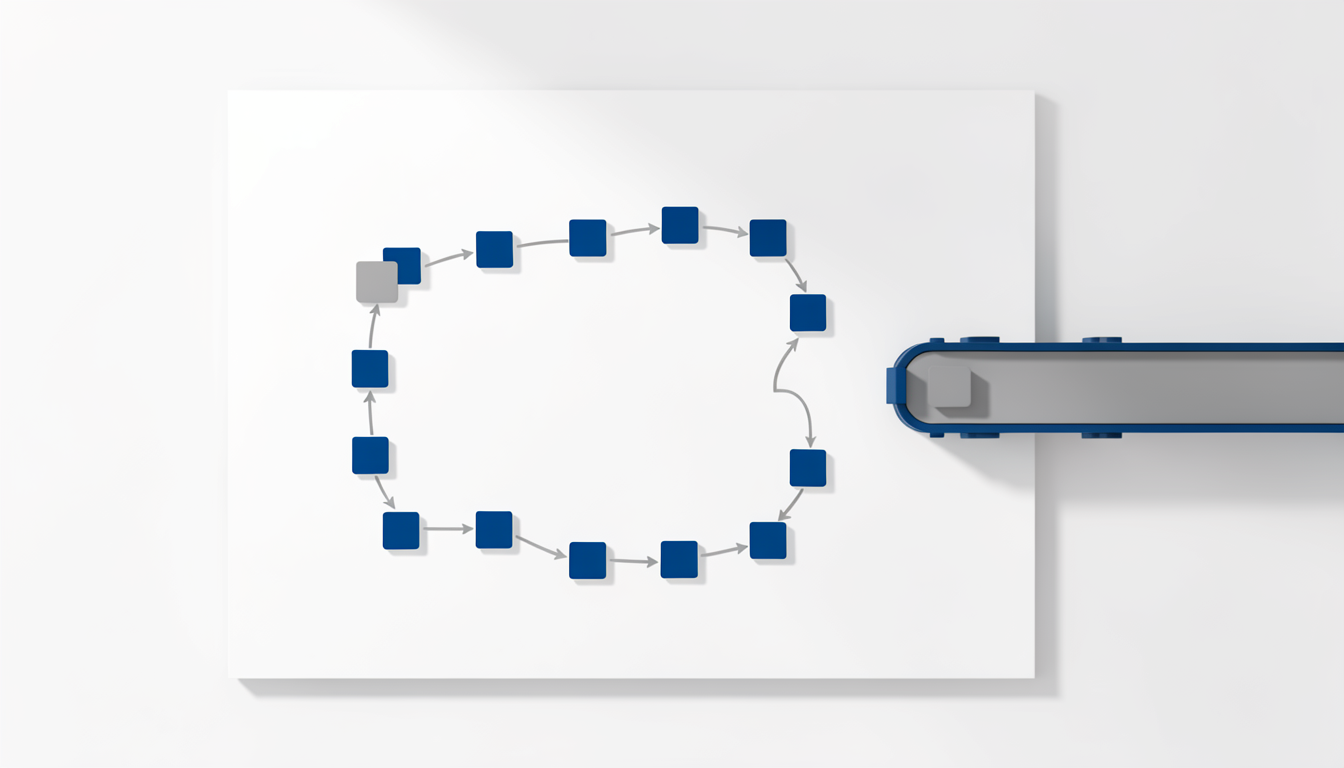
The agent does not predict the stock. It runs a five-stage loop: trigger, fetch, verify, threshold, report. Cap output at three alerts per session; each alert must include verified price, timestamp, source, and threshold crossed.
Set source rules before alerts
A naive alert fails if it treats every data point as a signal. Configure the agent to reject delayed quotes, grey market premium, subscription data, and sector notes unless marked as baseline.
- IPO demand data is context, not a live price. The IPO was subscribed 71.25 times overall, with QIB demand at 139.689x and retail demand at 25.403x. Use it for a baseline, not for an intraday alert.
- Grey market premium is pre-listing sentiment. A reported grey market premium of about 23% before listing is baseline context, not a live price.
- Sector notes are background. Skyways Air Services operates in the air freight forwarding and logistics sector. That is context, not a price trigger.
The agent should report only actionable change. It must verify the source, compare the price to a threshold, and suppress anything below the line.
Build the agent in five stages
Use a small agent workflow with one clear task per stage. Keep prompts narrow. Keep outputs structured. Do not let the model invent a price.
- Trigger. Run at market open, at fixed intervals during NSE trading hours, and after exchange halt or resumption. Do not run on headlines. Use time-based or event-based triggers, not sentiment-based triggers.
- Fetch. Pull the current NSE quote for Skyways Air Services. Return price, timestamp, currency, and source identifier. Reject delayed quotes and search snippets. Treat the opening price of Rs 124.99 as a reference point, not a live quote after listing.
- Verify. Check the quote against at least one independent source or a second exchange feed. Verify the symbol, exchange, currency, and timestamp. A price that appears only in a blog post, a social post, or a single aggregator is not verified. If verification fails, mark the record as unverified and stop.
- Threshold. Compare the verified price to the operator's rules. Use a percentage move from a reference price, a break above or below a round level, or a volume change relative to the session average. For a stock that opened below its IPO price, distinguish a listing discount from a new move. Alert only when the verified price moves more than a set percentage from the previous verified price or crosses an operator-set level.
- Report. Send a short note only when the threshold is crossed. Include the verified price, timestamp, source, threshold crossed, and reason. Do not include background. If the agent cannot verify the price, mark the record as unverified and stop.
Trigger, fetch, verify, threshold, report. If any stage is missing, the agent becomes a news summariser, not a price-alert tool.
Operate it without extra alerts
The operator tunes thresholds. Each note must be actionable within the same session.
- Set the reference price. For Skyways Air Services, use the NSE opening price of Rs 124.99, below the IPO price of Rs 138 per share, to define the first alert band.
- Separate context from triggers. IPO subscription of 71.25 times overall, QIB demand of 139.689x, and retail demand of 25.403x belong in a baseline note, not in an intraday alert. A reported grey market premium of about 23% before listing belongs in the same baseline.
- Log every rejected alert. When the agent sees a price move but does not report it, store the reason: unverified source, below threshold, duplicate, or stale timestamp. This log helps tune thresholds over time.
- Review the post-listing market capitalisation as context, not as a trigger. The reported figure of about Rs 1,809.53 crore helps the operator understand the size of the move, but it should not replace the price threshold.
Acceptance test: after each trading day, the operator must record the verified price, threshold crossed, source, timestamp, and reason for every alert. Suppress any alert whose reason is an unverified mention or a non-price data point. The agent passes only when every reported alert traces to a verified NSE quote that crossed an operator-set level.