Verify Devin Before Critical Path
Check unattended task boundary, decision telemetry, and cost-per-task math before putting Devin on production work.
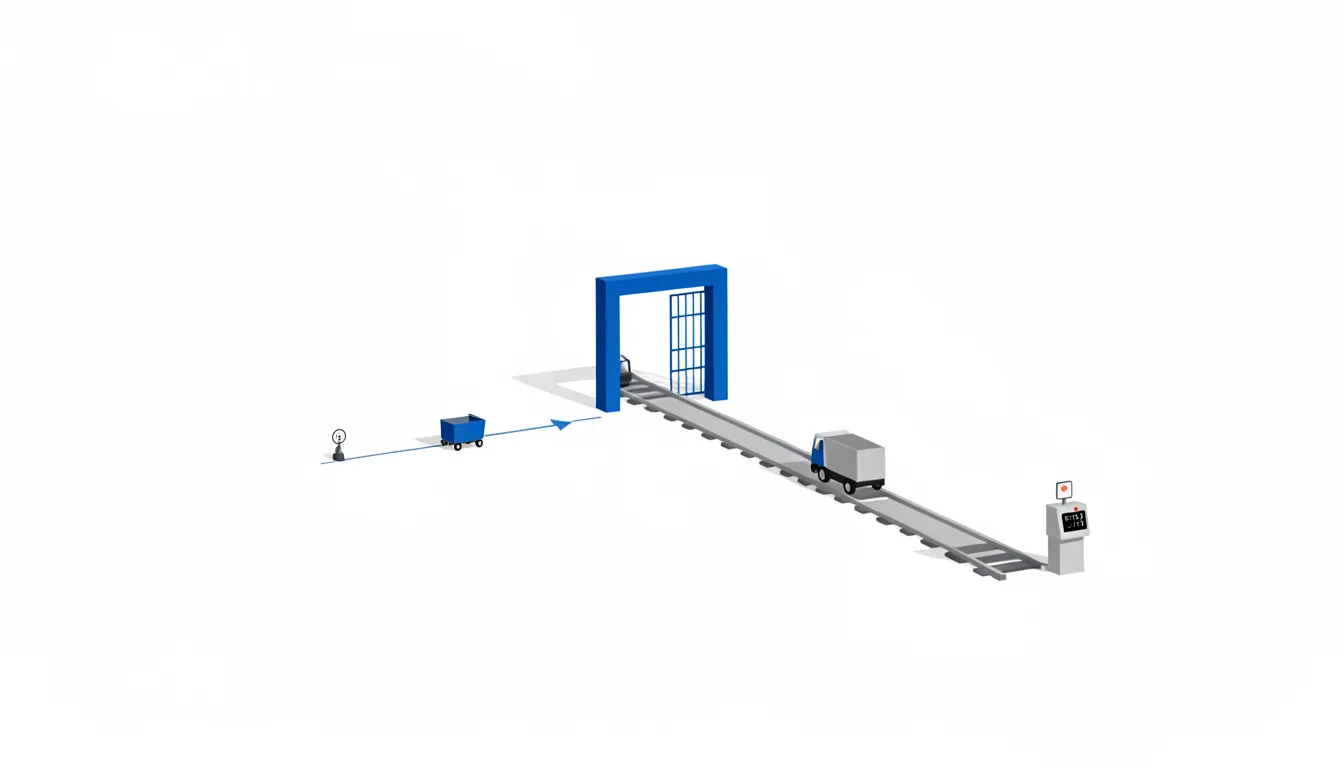
You are deciding whether Devin can own production work without a human in the loop. Cognition secured a $2 billion investment round at a $48 billion company valuation. Before granting access, verify the unattended task boundary, decision telemetry, and cost-per-task math.
Three tests decide production access
Keep the list short enough to run in a vendor call. Each item should produce an artifact, not a promise.
- Define the unattended task boundary before any production task.
- Require a decision log that shows trigger, action, rollback path, and human override.
- Calculate cost-per-task from total agent spend divided by completed tasks.
The boundary is the entry test
Cognition said Devin can investigate incidents, rank security vulnerabilities, and execute event-triggered tasks in Slack, GitHub, Linear, and other systems without a separate chat per task.
The claim raises the operator question: which of those actions can run without approval? The boundary is the control surface. Without it, the agent can look productive while expanding its reach.
Start with the smallest environment that can break. Ask which branches it can write to, which secrets it can read, and which deploys it can trigger. If the answer is all of them, stop. You need a scoped pilot. A scoped pilot should have a named owner, a kill switch, and a rollback owner. The boundary should be written down, not implied by a demo. If the vendor cannot state it plainly, treat the gap as a production risk.
Cognition identified Nvidia, GE Aerospace, Citigroup, Mercedes-Benz Group, and Modal Labs as Devin users, with the work spanning chip design, aviation, financial services, automotive engineering, and AI infrastructure. A customer list shows adoption, not your failure mode.
Telemetry is the audit test
The decision log is the audit trail. If the vendor cannot show it, the agent is not auditable. Telemetry should let you answer what happened, why it happened, and who can stop it.
A chat transcript is not enough. It shows conversation, not control. For production work, you need machine-readable events, not screenshots. Require a sample export before you sign. It should be enough to test the schema.
The log should be queryable, not just readable. You need to filter by task, repo, environment, and outcome. Request retention and export format. A dashboard alone makes you dependent on vendor uptime. For security work, require evidence that vulnerability ranking is tied to a reproducible rule or model output.
Cost math is the budget test
Cognition's annualized run-rate revenue increased from $492 million in May to $900 million. Cognition's annualized revenue is projected to hit $4 billion to $5 billion by the end of 2026.
Investors' continued billion-dollar-plus investment in Cognition indicated that some backers do not expect AI coding to consolidate into a single winner. Scale is a signal, not proof. It shows the vendor can keep building, not that your workload is safe.
Cognition leases a large Nvidia server cluster, and the company's total cash burn could reach $800 million this year. That burn does not appear on your invoice line by line. Your cost model still needs to account for it.
Get the price model: per task, per minute, per token, or per seat. Then model your worst month, not your best demo. Include idle time, retries, failed tasks, and human review. A vendor that cannot separate compute from licensing leaves your cost forecast soft.
Pull recent cost-per-task data, then divide total agent spend by completed tasks. Compare that number to the cost of a human engineer for the same task. If the agent fails, include the cost of review, rollback, and rework.